The Sicilian Black Bee and its honey
The Sicilian Black Bee — Apis mellifera sicula — is a native Sicilian bee, present on the island for millennia and today considered a genetic heritage to be protected. More robust and adapted to the Mediterranean climate than hybrid breeds, it lives and works among the maquis, chestnut woods and flowering meadows of the Nebrodi, gathering nectar exactly as it always has — without hurry, without force.
The result is a honey that carries the landscape within it: wild, aromatic, deep. Each variety has a distinct character, linked to the flowers and seasons of the territory.
Available varieties
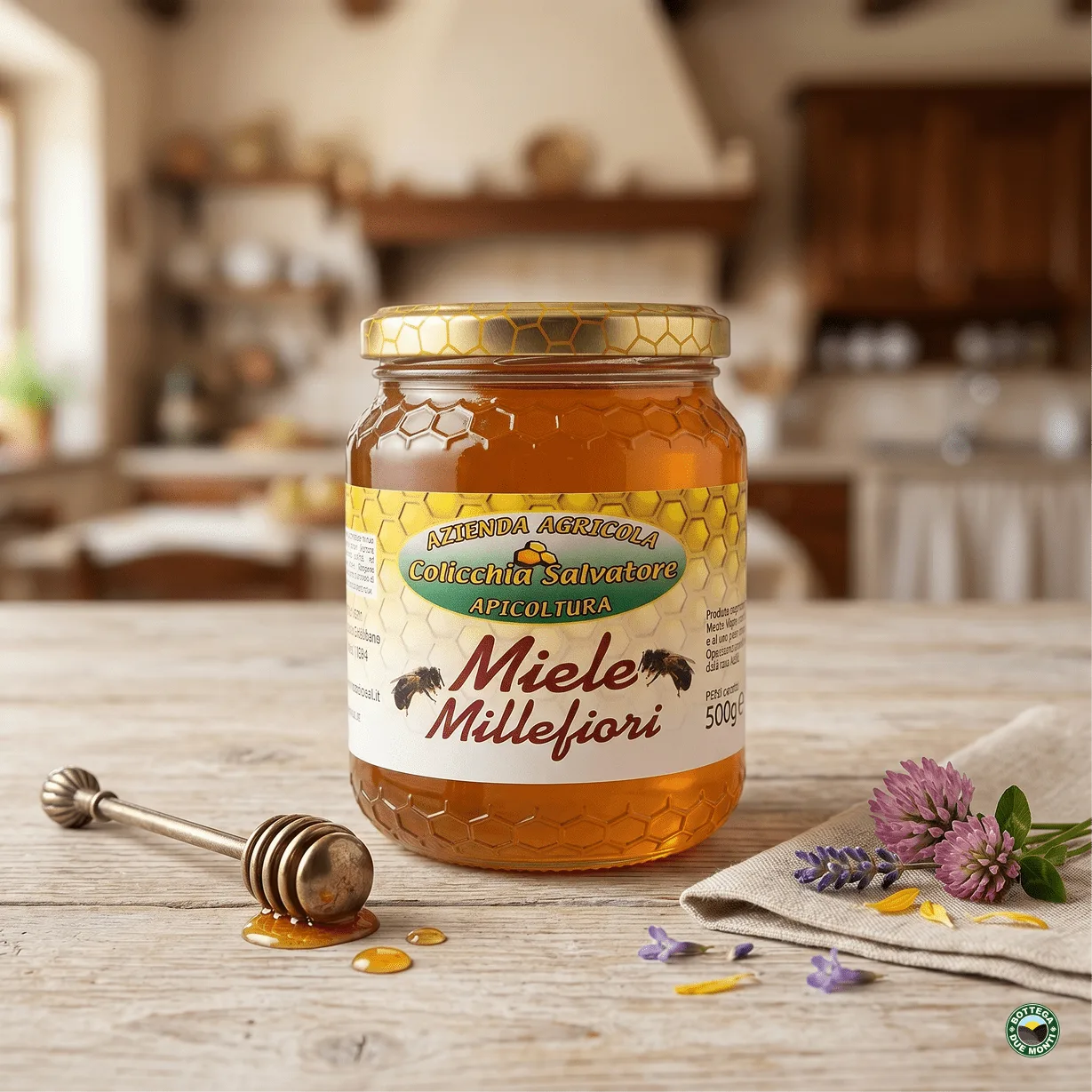
Wildflower — The seasonal honey par excellence. It changes every year because the flowering changes: an olfactory archive of the Nebrodi landscape in that precise moment. Sweet, floral, balanced.
Chestnut — Amber and bold, with a slight bitter note that makes it unique. Perfect paired with aged cheeses such as Pecorino or Maiorchino. Rich in mineral salts and antioxidant properties.
Honeydew — It does not come from flower nectar but from the secretions of insects that feed on tree sap. Dark colour, intense and slightly resinous flavour. The honey for the most curious palates.
Sulla — Pale, almost white, with a delicate fragrance and clean sweetness. It crystallises quickly — a sign of quality, not a flaw. Ideal for breakfast or with fresh ricotta.
Thistle — Strong and aromatic, with herbaceous notes and long persistence. Produced in limited quantities during the summer flowering of Sicilian wild thistle.
How to use it
By the spoonful, on semola bread, with fresh or aged cheeses from the bottega. In the kitchen to marinate meats, glaze vegetables or sweeten herbal teas. In all the ways an authentic honey deserves to be savoured.
Storage
At room temperature, away from heat sources and direct light. Crystallisation is natural and does not alter the properties — to soften it, a low-temperature bain-marie is enough.
Reviews
There are no reviews yet.